Spring 2026: Volunteering with Grey Sauble Turtle Conservation
This spring I began volunteering with the Grey Sauble Turtle conservation group in Grey County. My role is to locate nesting turtles, record observations for research, and install nest-protector screens over the eggs. These protections help reduce predation, prevent compaction from passing vehicles, and encourage hatchlings to head toward the ditch instead of the road — giving many a much better chance of survival.
What I’ve noticed so far
Nesting activity tends to peak on warm, wet evenings.
On stretches of road where new erosion-control technology has been installed, turtles struggle to dig through gravel and tar to reach sand — it’s heartbreaking to watch them try.
Predators clearly take advantage of nesting sites; it’s not just human eyes watching.
Properly placed 2 ft × 2 ft frames with a screen and spikes work well when positioned carefully, protecting eggs without blocking hatchling exit routes.
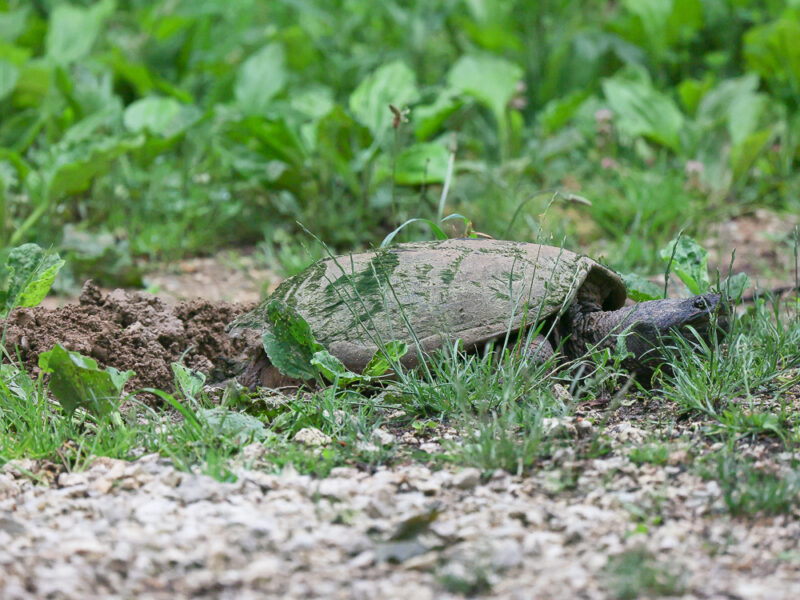
Female covering her nest
How you can help
Volunteer as a nest spotter and observer — more eyes mean more nests found and protected.
Help build nest-protector frames; there’s a consistent need for more of them.
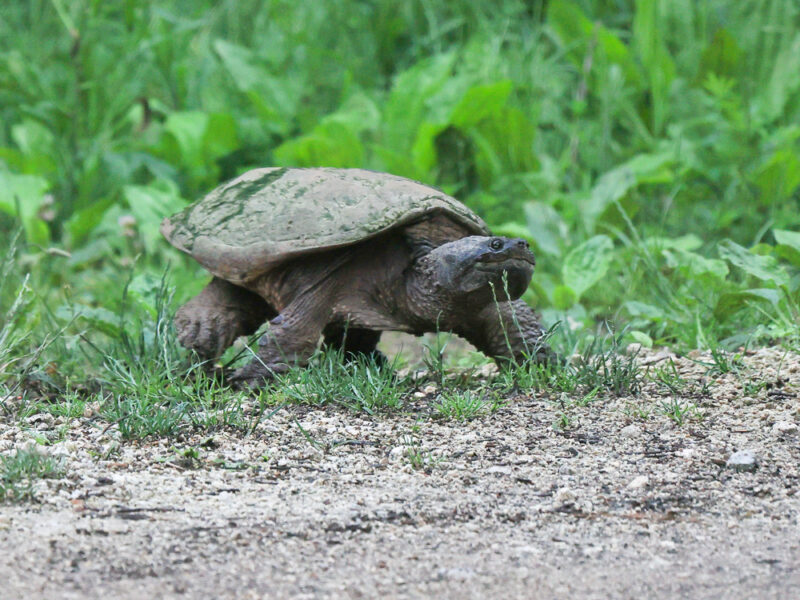
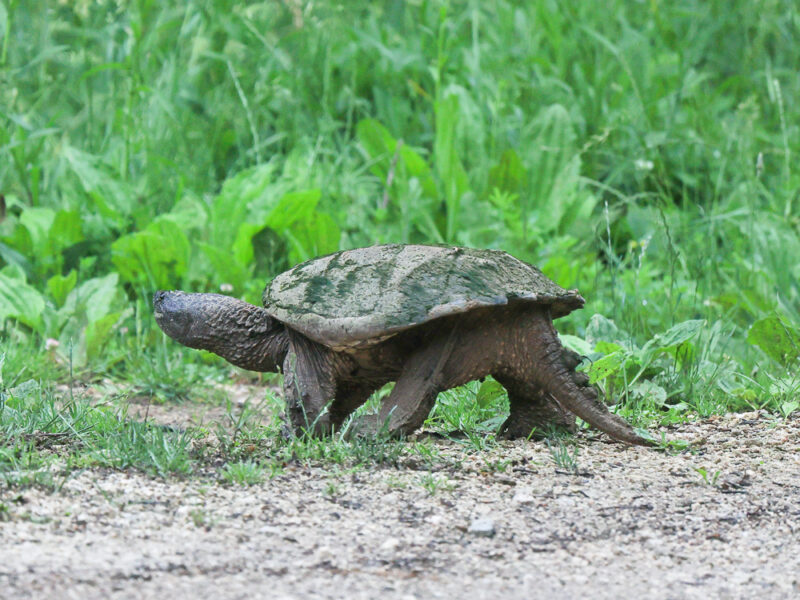
Heading to the Beaver River after laying eggs on the sandy bank
For more information on volunteering opportunities and how to get or build frames, visit Grey Sauble Conservation’s website or contact their volunteer coordinator.
Dark Eyed Junco, still here for early spring, soon to head north to cooler nesting grounds. Commonly found in the underbrush all over North America. so common that I overlooked adding the Junco to my blog, here it is newly added at #201.
On a beautiful winter day, if you look carefully enough, you might see these majestic owls about 1 km apart. Stoically guarding their hunting territory.
These little birds move so quickly through the underbrush that they are very difficult to photograph. This pair were collecting insects and spiders to feed young which we could hear but not see. They must have been ferocious eaters because the parents wasted no time catching meals.
I was delighted to find this bird. Just when I was thinking “wouldn’t it be cool to find a Black Throated Blue” there is was right in front of me. Click, click, click, click. A very approachable bird once found.
I drive past these playful little guys daily, it’s fun to watch them grow up. Not wanting them to become familiar with people stopping, I only paused once for a couple of photos and carried on. Best left alone even when they choose homes at the road side.
This was a very successful Martin house with more than 50 in the colony, they actually opened the house at night and counted the sleeping birds, done by the Audibon Bird Society volunteers.
These are generally quick to fly, even tho we see many, it can be hard to get a clean shot of one. This female was distracted gather nesting material and I was able to sneak in a few shots.
This fellow was determined to have his photo taken, bird #151 perched right in front of the camera, the zoomed out photo shows how adamant he was! Like a Grackle we see at home, however this fellow was in Florida and is a super sized huge Grackle.
While in Florida I was lucky enough to come across a Heron Rookery, these young herons look like they are almost at the fledgling age. They are always starving hungry and very demanding of the parents when they bring back a meal which then needs to be coughed up.
Small white goose with black primary feathers and stubby red based bill. Often in company with other geese. Our smallest goose found in Ontario, this one was at the Minesing Wetlands.
I was looking for Snowy Owls and found this little fellow instead, actually I have seen 4 this week on different country roads, all out of range until today. I had no idea that Mink swim for fish and are very good divers, they are more like Otters than I thought. Then I was sad to think anyone would cage such a playful animal on fur farms that obviously has tons of energy and intelligence. Happy to get to know a bit more about Mink.
Ever drive down the road with the window rolled down and hear a different bird chirping away? This bright blue fellow was singing up a storm, so of course I stopped and took a photo!
Small Yellow Lady’s Slipper has red petals behind the flower, Large Yellow Lady’s Slipper has green petals, can you see the difference? I think these are both red hmmmm….
Wet lands, shaded, mossy rich bogs, and you will find these late June along the sides of the trails. Always spectacular and a nice find.
Had a great time looking for Snowy Owls, they are back from the far north! I personally saw 9 birds south of Stayner, and on the way home an additional 3 birds, for a total of 12, my personal record!



 urple Martins


